2026-11-11
Two rolls can both be labelled glossy and still sit 20 gloss units apart — and the gap only shows up after lamination, as a milky cast over a dark cover, a curl at the sheet edge, or a web that keeps wrapping itself around the heated roller. A glossy laminating roll is really three decisions stacked on top of each other: the gloss target and the angle it is measured at, the film structure (a BOPET or BOPP base carrying an EVA hot-melt layer), and the mechanical fit between the roll and the machine. The third one still decides whether the job makes money, even when the first two are right.
Gloss is optics, not a finish name. It is reported in gloss units (GU) measured at a fixed angle — 60° for most film work, 20° when the surface is very sharp, 85° for low-sheen surfaces. The reading depends on how smooth the base film is, how the chill roll finished it during extrusion, and how evenly the adhesive wets out. A 100 GU film and an 88 GU film look identical on a small swatch; on a 500-sheet run of dark-ink leaflets the lower one starts to look faintly hazy.
On heated machines the base film is the practical anchor. A glossy thermal laminating roll built on BOPET-EVA or BOPP-EVA covers most offset and digital jobs, and it is the melt behaviour of that adhesive layer — not the shine — that sets the maximum line speed.
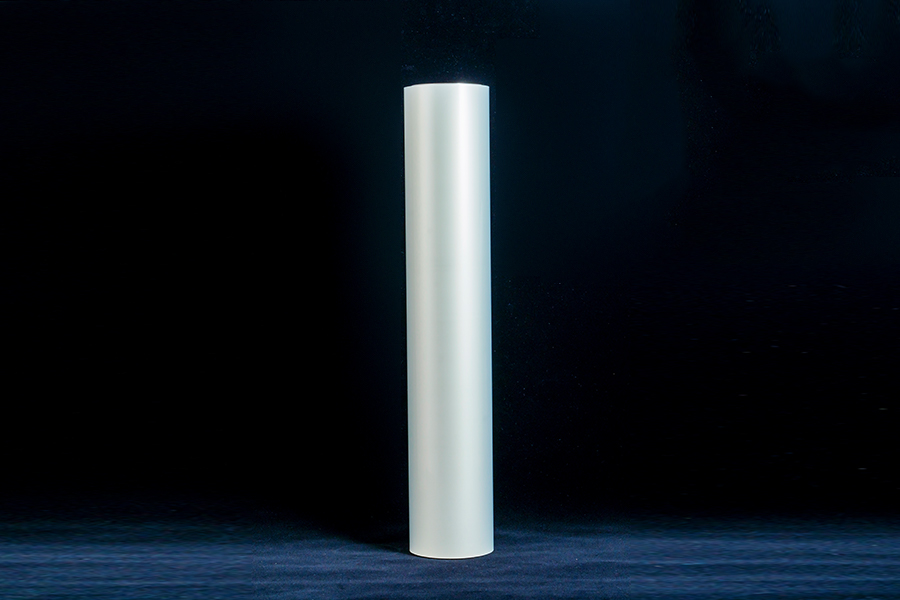 Glossy Thermal Laminating Roll FilmA PET/EVA glossy roll for offset and digital lamination, with stated gloss, thickness, width and core options for checking line-speed and finish requirements.View Product →
A quote that says only "glossy" gives you nothing to inspect on arrival. Ask for a gloss range, the measurement angle, and the test method — ASTM D2457 and ISO 2813 are the usual references. The spread below is what commercial roll film datasheets typically quote for each surface family.
Typical 60° gloss readings by surface type
Ranges reflect values commonly quoted on commercial film datasheets, not a single measured lot. Confirm the guaranteed minimum with your supplier's certificate of analysis.
Two checks worth doing before a big order: calibrate your glossmeter on the reference tile, and measure the laminated sheet over the same printed patch each time. A dark solid will read differently from bare stock with the same film, because reflected light passes through the film twice on the printed area.
A glossy laminating roll is not one material. It is a base film, a hot-melt adhesive layer, and usually a treated or slip-modified back side, wound under controlled tension. Each layer does a different job — and only the outer face decides the gloss.
Simplified layer stack of a one-side glossy thermal roll. Cold films replace the EVA layer with a pressure-sensitive adhesive plus liner.
Base film thickness drives stiffness and dimensional stability under heat. The EVA coat weight drives bond strength and how much haze the finished sheet gains. The back-side treatment decides whether the roll unwinds cleanly at speed or blocks on the spool. When a roll performs badly, the cause is usually in the layer nobody wrote into the purchase spec.
| Parameter | Common range | Why it changes the result |
|---|---|---|
| Total thickness | 25–75 µm | Stiffness, edge curl, throughput on thin stock |
| Base film | BOPET 12–23 µm or BOPP 15–30 µm | Gloss retention and stability at laminating temperature |
| Adhesive coat weight | EVA, roughly 8–25 g/m² | Bond strength, haze, activation window |
| Gloss | 85–105 GU at 60° | Visual match to the print; always check angle and method |
| Web width | 305–1,300 mm, slit to order | Trim waste and handling on the machine |
| Core ID | 25.4 mm (1 in) or 76.2 mm (3 in) | Shaft fit; a wrong core stops the run on day one |
| Roll length | 200–3,000 m | Changeover frequency and splice count per roll |
Core diameter mismatches cause the most first-day failures. A 25.4 mm core forced onto a 76.2 mm shaft runs off-centre, and the resulting tension ripple shows as regular bands of gloss variation along the sheet. Width and roll length matter more than they appear: a 3,000 m roll cuts changeovers but needs a shaft and brake that hold consistent tension as the diameter falls.
Thickness is the other number worth arguing about, because it is rarely about protection alone. How film thickness shapes a laminated sheet comes down to stiffness, recovery after heat, and how the sheet behaves when it cools on the pallet — three things a 7 µm difference can quietly change.
Most "bad film" complaints trace back to process settings or paper condition rather than the roll itself. Four repeat offenders:
There is a workable debugging order here. Air bubbles and water ripples in lamination usually follow predictable causes and can be cleared within a shift by adjusting temperature, nip pressure, and paper conditioning. When bubbles persist at correct settings, bond strength to that specific ink is the next suspect — and a higher-bond film is a cheaper fix than cutting line speed by 30%.
 High-Bonding Laminating Film for Digital PrintsA tackified thermal film for digital toner, dark solids and photo prints, aimed at edge lifting and bubbling when standard EVA bonding falls short.View Product →
The choice is rarely about looks alone. Gloss gives the highest contrast for photos and dark solids but shows fingerprints and fine scuffs on handled items. Matte hides handling marks and reads better under direct light, at some cost in colour depth. Silk touch sits between the two and is common on premium packaging because it feels different in the hand.
Qualitative comparison based on typical finishing behaviour of the two surface families; relative positions shift with base film and coat weight.
When the same artwork runs in several finishes, keep the base film and adhesive identical and change only the surface treatment. Machine settings stay constant, and operators are not relearning a temperature profile for each SKU. A matte thermal laminating roll built on the same BOPET-EVA structure will run at the same speed and roller temperature as its glossy counterpart.
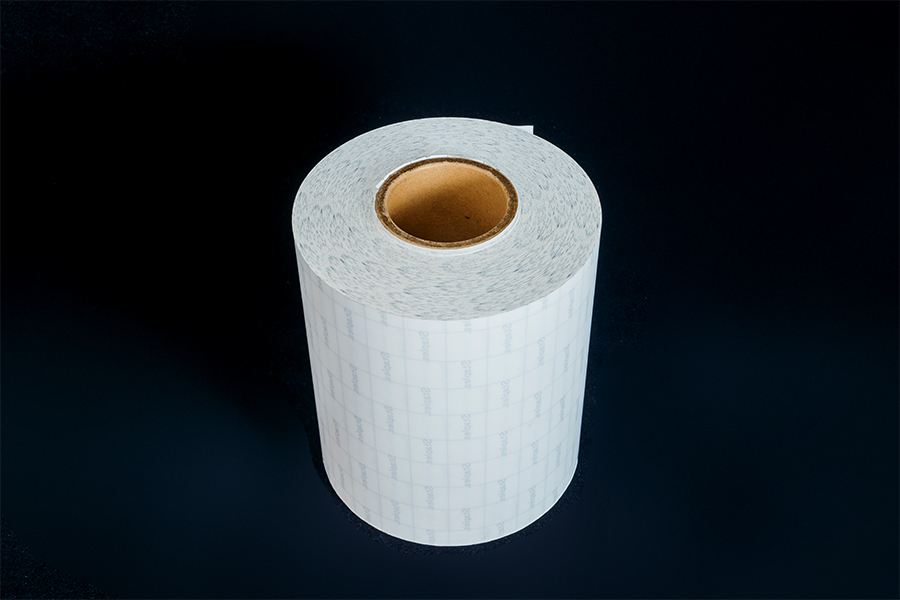 Matte Thermal Laminating Roll FilmA BOPP or BOPET/EVA roll with low gloss and write-erase reverse, suited to matching machine settings across gloss and matte finishes.View Product →
Then add a sample. A 100-sheet trial on your own laminator, at your normal speed and temperature, answers more than any datasheet — and it is the only way to catch a roll that measures beautifully on gloss but bonds poorly to your ink.
Gloss is measurable, so it can be specified. Once the gloss range, the film structure, and the core and width are written into the order, most of the variables that ruin a run disappear before the roll is even loaded onto the shaft.
They are the same material in different formats. "Roll" describes the supply form and winding, while "glossy laminating film" refers to the surface finish rather than the packaging.
Most thermal glossy rolls measure 85–105 GU at 60°. Anything below 80 GU usually reads as semi-gloss against a dark printed solid.
No. Thermal rolls need an EVA activation temperature, typically 90–130 °C. Cold machines require pressure-sensitive film with a liner.
Usually moisture in the paper, insufficient nip pressure, or a roller temperature outside the adhesive's window. Check paper conditioning before blaming the film.
Around 25–32 µm for text stock and 32–43 µm for covers. Thicker film adds stiffness but can curl thin sheets.
Most suppliers quote 12 months from production when kept below 30 °C, away from direct sun, and on a flat-ended pallet to avoid roll blocking.
Wholesale Laminating Film Roll Manufacturers





 English
 русский
 Español
 Português