2026-10-14
A brand team approves a carton because the black logo looks wet and deep. Three weeks later the boxes arrive looking flat and grey. Nothing about the board changed; the operator simply loaded 32 micron matte roll film instead of the 25 micron gloss film the proof was approved on, and the 60 degree gloss reading fell from the mid-90s to under 15 gloss units.
The short answer first: specify a high gloss lamination film when colour depth, contrast and reflection are the point of the product, and specify it by measured gloss units and micron thickness rather than by words such as "shiny". Switch to matte, silk touch or anti-glare film the moment the surface will be read under office lighting, touched all day, or written on.
What follows explains how gloss is actually measured, what sits inside a high gloss film, how to write the purchase specification, and which defects to watch for on the line.
Gloss is a number, not an adjective. On plastic films it is read with a glossmeter at the 60 degree geometry defined in ASTM D2457, and expressed in gloss units (GU). Clarity is a different property altogether, measured as haze under ASTM D1003, which is why a film can be crystal clear and still not be high gloss.
Suppliers normally quote ranges rather than single figures: roughly 90 to 100 GU for high gloss thermal film, 85 to 92 GU for standard gloss, 30 to 40 GU for silk touch, and below 15 GU for matte. Treat those bands as indicative. A film bonded too cool often reads 70 to 80 GU even when the roll was sold as high gloss, because the adhesive never fully wets out against the printed sheet and the surface keeps a faint orange-peel texture. Always confirm with your own meter on a finished sheet.
Nearly every thermal laminating roll film is a two-layer construction: a BOPET or BOPP polyester base and an EVA hot-melt adhesive coating. The EVA does the bonding work; the base film does the optical work.
The gloss you see is the top surface of the EVA layer after it melts and re-solidifies against the laminator roller. That is why roller finish, melt temperature and line speed all touch the final reading. The BOPET core, commonly 12 to 15 micron in a 25 to 35 micron finished film, supplies stiffness, dimensional stability through the heat zone, and the clarity that lets printed colour show through without a grey cast.
A base film with low surface roughness and few internal slip particles scatters less light, and less scattered light means higher gloss and lower haze at the same thickness. If a roll delivers good bond strength but a dull finish, the base film is usually the reason, not the adhesive.
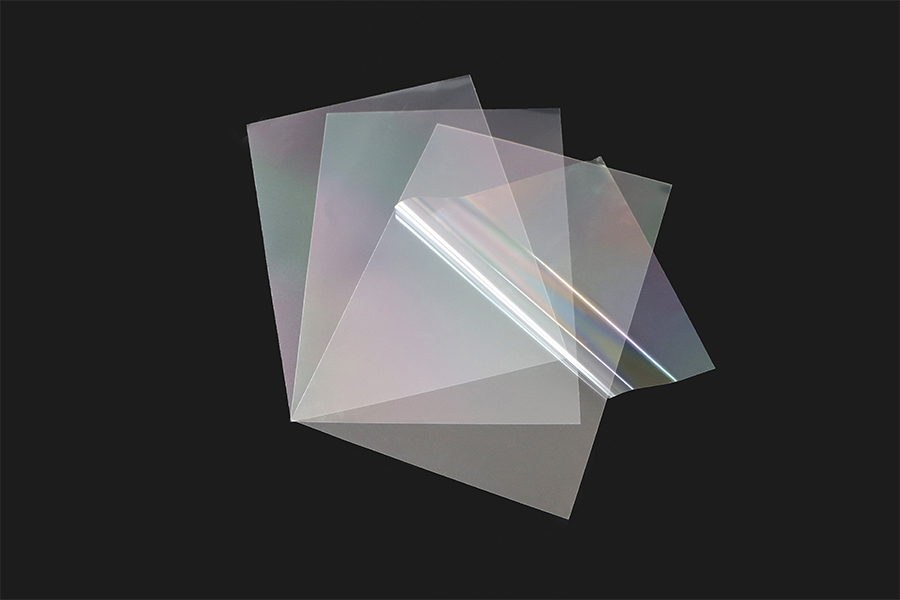
 Glossy Thermal Laminating Roll Film for Print ProtectionPET/EVA roll film for thermal lamination of prints, photos, menus and packaging, offering high gloss, waterproof sealing and scratch resistance.View Product →
Both routes can reach the same gloss band; the difference is how the bond forms. Thermal lamination melts EVA at roughly 95 to 115 degrees Celsius at the nip, so the bond is immediate, the sheet can be trimmed right away, and offset-printed paper or board is usually well served. Cold lamination uses a pressure-sensitive adhesive: no heat at all, which makes it the practical route for toner prints, thermal-printed labels and heat-sensitive substrates, but full adhesion builds over several hours and edges are more likely to lift if the sheet is trimmed too early. If you are weighing the two, the difference between thermal and cold lamination comes down to heat versus pressure-time.
High gloss is also the wrong call in three specific situations: any surface people read under a ceiling light, because of glare; any surface handled constantly, because fingerprints and fine scratches show more; and anything that will be written on with ballpoint, because ink skips across a smooth film. Matte and silk touch handle those jobs better, and a scratch-resistant or anti-glare coating is a reasonable middle path when you still want depth of colour.
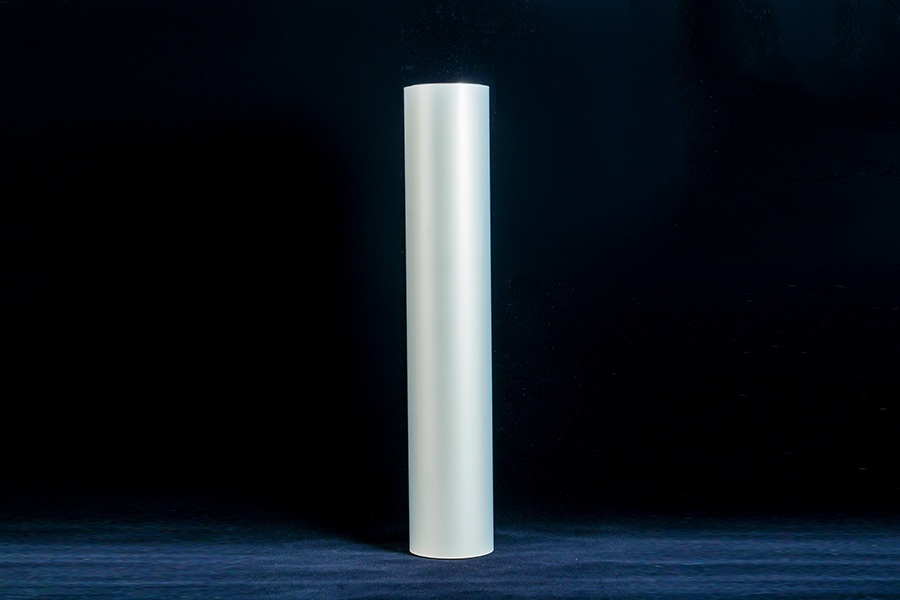
 Glossy Laminating Film for ID Cards and Print MediaPET/EVA glossy film for laminating ID cards, photos, documents and business cards, available in pouches or rolls with optional matte, silk and anti-static variants.View Product →
Film is bought by the roll, so a small number of figures decide whether the job runs cleanly: measured gloss band and test method, finished thickness in micron, roll width and length, core diameter, adhesive type, and the surface treatment if you are printing on the film. Thickness is the fastest lever on stiffness: 25 to 32 micron suits offset paper up to roughly 200 gsm, 35 to 43 micron gives heavy covers and menus the rigidity they need, and 75 micron and above belongs on cards that are handled every day.
| Finish | 60 degree gloss (GU) | Typical use | Trade-off to plan for |
|---|---|---|---|
| High gloss, BOPET and EVA | 90–100 | Cosmetic cartons, covers, folders, cards | Shows fingerprints, dust and fine scratches |
| Standard gloss | 85–92 | General office lamination, book covers | Slightly softer colour depth than high gloss |
| High gloss with hard coat | 88–96 | Covers handled daily, menu cards | Higher film cost, tighter process window |
| Silk touch | 30–40 | Premium packaging, business cards | Softer blacks, harder to wipe clean |
| Matte | 8–15 | Reading material, labels, write-on surfaces | Reduces colour depth on dark ink |
Matte forgives dust, bubbles and faint ripples. A high gloss surface puts all of them under a spotlight, so the process window is genuinely narrower.
Pre-drying board, cleaning sheets, and slowing the line are the three changes that solve most of these before anyone touches a temperature dial.
Buying film without a test report is guesswork. Ask for the gloss range and the method behind it, haze, peel strength in newtons per 15 mm, thickness and width tolerance, core inner diameter, and the batch or lot number on every carton so a problem can be traced. If the film will be printed rather than used as a top layer, ask for the dyne level, because ink adhesion below roughly 38 dynes per centimetre is unreliable.
Capacity matters once a specification is approved. WONLAMI, for example, states more than 25 years of extrusion coating experience, plants in Yixing and Thailand, and an annual output above 30,000 tonnes from 10 extrusion coating lines, 29 automatic slitters and four packing lines; the production floor pages describe that footprint in more detail. Whatever the supplier, the discipline is the same: sample, measure, approve a control card, then hold every incoming roll to it.
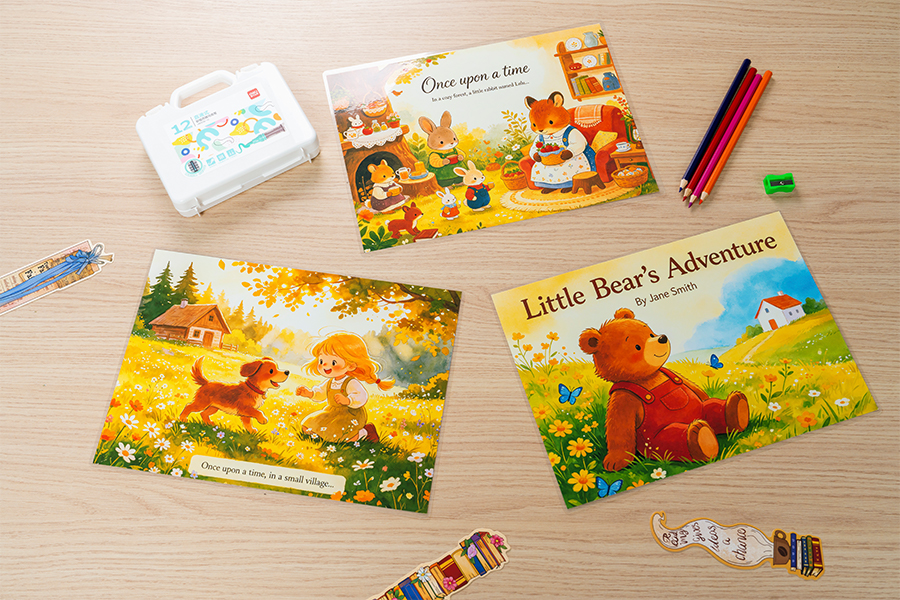 Scratch-Resistant Laminating Film for High-Friction Commercial SurfacesPET laminating film with scratch-resistant nano coating for menus, control panels, notices and displays, offering 3H hardness and high transparency.View Product →
Wholesale Laminating Film Roll Manufacturers





 English
 русский
 Español
 Português