2026-09-29
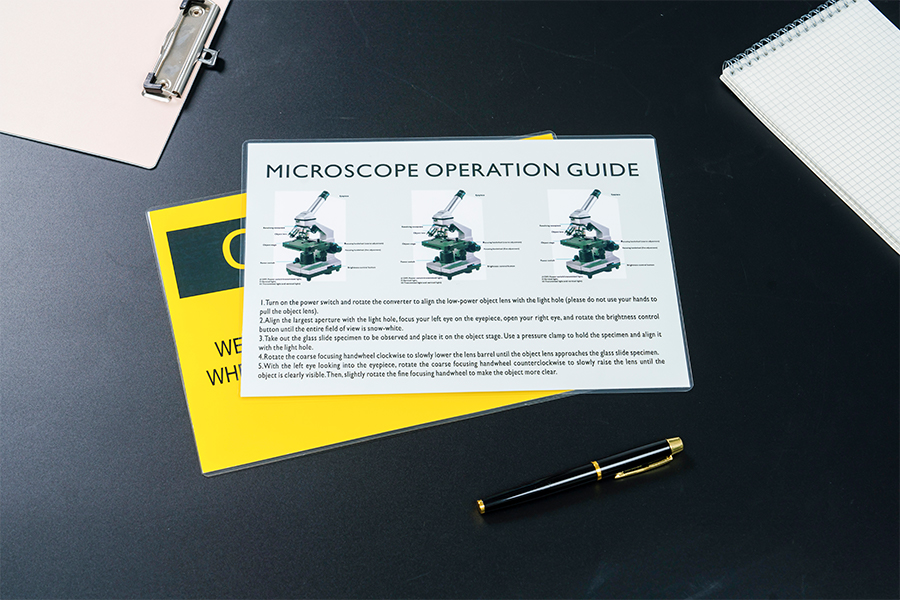
An outdoor menu board that fades from deep red to pink in a single summer is usually not an ink problem. It is a film problem. The laminate sitting on top of the print is the only barrier between ultraviolet radiation and the pigment underneath, and a plain clear film with no UV function lets most of that radiation pass straight through to the ink layer.
Here is the conclusion first: anti-UV laminating film is a laminating film whose base layer, adhesive layer or surface coating contains UV absorbers or UV-blocking minerals, so that a defined portion of ultraviolet radiation never reaches the printed surface. It should be bought and sold on spectral data, a stated weathering test method and a measurable retention of optical properties, not on the word "UV" printed on a carton.
The sections below explain what such a film actually blocks, how the protection is built into the construction, which numbers belong on a purchase order, and where the real sourcing risks sit.
The ultraviolet range runs from roughly 100 nm to 400 nm, and the three bands inside it behave very differently once sunlight reaches the ground:
That split has a commercial consequence. A film that only trims UV-B can honestly carry a "blocks UV" claim and still do very little for a window display that receives direct sun for six hours a day. When a buyer asks what an anti-UV laminating film does, the useful answer is a number attached to a wavelength window, usually expressed as the percentage of transmission reduction across 315-400 nm.
There are three practical ways to build UV resistance into a laminating film, and most commercial products combine at least two of them.
The trade-off is not only cost. Raising absorber loading increases the risk of initial yellowing, and loading it into a layer that is too thin simply wastes chemistry. That is why film thickness and adhesive coat weight are inseparable from the UV claim, a relationship explored in this note on what film thickness really controls.
 Anti-UV Laminating FilmAnti-UV Laminating film is a functional barrier film for outdoor use. Made with high-performance PET film and functional modified EVA, it offers great mechanical stren...View Product →
Exploded view of a functional laminating film stack with UV protection carried in two layers
In a thermal roll film, the EVA adhesive layer melts and bonds under heat, so the absorber is normally compounded into that adhesive. In a cold roll film, bonding relies on pressure-sensitive chemistry, and the UV function is more often placed in a top coating or in the base film itself. The practical difference for a converter is that thermal grades are more sensitive to press temperature and dwell time, while cold grades are more sensitive to storage conditions and shelf life.
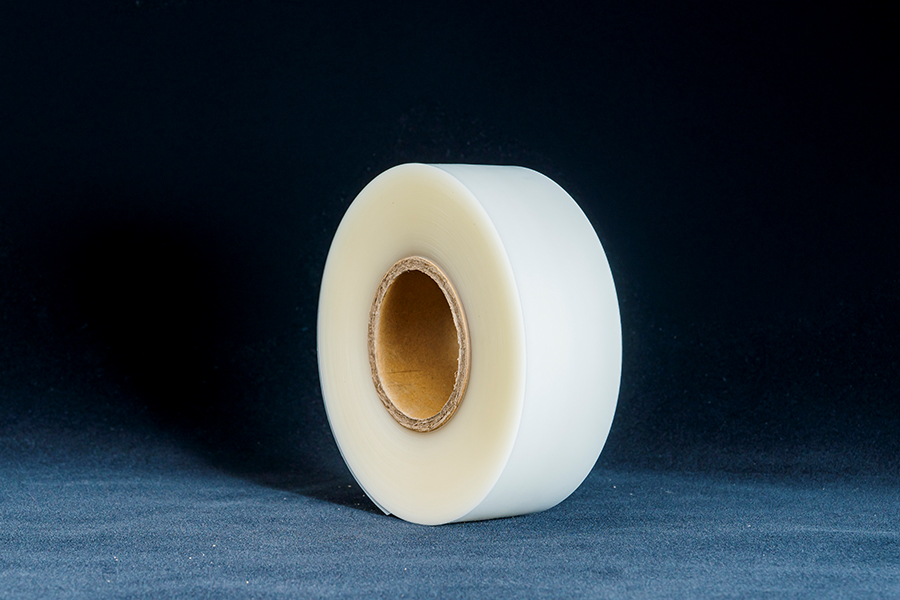 Thermal Laminating Roll Film SuppliersFlexible Laminating Roll FilmView Product →
Vague language is the single largest source of disputes on UV-protective film. Write the requirement as a measurable item, then agree in advance how it will be tested.
| Specification | Why it matters | How to state it |
|---|---|---|
| UV blocking window | Determines whether UV-A is covered or only UV-B | At least 90 percent transmission reduction across 315-400 nm, measured by spectrophotometer on a specified lot |
| Total thickness | Controls stiffness, feedability and edge quality in the laminator | Nominal micron value with a stated tolerance, for example +/- 5 percent |
| Adhesive coat weight | Governs bond strength and how much absorber the layer can carry | Grams per square metre, with a tolerance band and a test method |
| Haze and gloss | Balances clarity against the matte or semi-matte look a brand wants | Haze percentage and gloss units measured at 60 degrees |
| Accelerated aging method | Makes outdoor life claims comparable between suppliers | ISO 4892-2 xenon-arc or ASTM G154 fluorescent UV, with exposure hours stated |
| Colour fastness target | Connects film performance to the printed result the client sees | Blue Wool grade per ISO 105-B02, for example grade 6 or better |
| Roll format | Avoids machine misfeeds and wasted setups | Width, core inner diameter, winding direction and slit tolerance |
| Storage and shelf life | Absorbers and pressure-sensitive adhesives both age in storage | Temperature range, humidity limit and a use-by window from the production date |
 Laminating Film SuppliersGlossy Laminating FilmView Product →
The answer is straightforward: it pays where a printed object spends months in daylight and reprinting costs far more than the film itself.
It is usually overkill for short-life indoor labels, packaging discarded within weeks, or jobs already protected by a UV-stable ink system inside an opaque box.
Relative positioning of three film constructions across the attributes buyers compare most often
The most common failure is not a bad film. It is a film that was never specified, so nobody can prove what it does.
A practical screening routine is short: request the curve, retain a sample from each delivered batch, and run your own accelerated aging test on a printed sheet rather than on blank film. The finished print is what the client sees, and it is the only sample that answers the real question. Working with a supplier that controls its own extrusion coating lines shortens that loop, because process adjustments can be made at the coating stage instead of being negotiated through a trading chain.
It is used wherever a printed surface stays in daylight for months: outdoor signage, garden and agricultural labels, window decals, display packaging and long-life documents. The film reduces the ultraviolet radiation reaching the ink layer, which slows fading and surface degradation.
No. It slows fading rather than eliminating it, because visible light, heat and humidity also contribute to colour change. A realistic target is a measurable extension of outdoor life, verified through an accelerated aging test rather than an open-ended promise.
Thickness is chosen for the substrate and the machine first, then for UV function. Thin films around 25 to 35 microns suit flexible documents and cold lamination, while 75 to 125 microns are common for rigid signage. Ask the supplier to confirm the absorber is carried in a layer thick enough to do its job.
Yes, provided the grade is built for thermal bonding. Thermal UV films use an EVA adhesive loaded with absorber, so they are sensitive to roller temperature and dwell time. Running them outside the recommended window weakens both the bond and the UV layer.
Ask for a spectrophotometer transmission curve covering 280 to 400 nm, measured on the specific production lot. Then confirm the accelerated aging method, typically ISO 4892-2 or ASTM G154, and the stated exposure hours behind any outdoor life claim.
It can. Inorganic blockers such as nano zinc oxide may raise haze slightly, and heavy organic loading can add a warm tint. If appearance is critical, request a laminated sample of your own print before approving the batch, and compare it under both daylight and interior lighting.
Wholesale Laminating Film Roll Manufacturers





 English
 русский
 Español
 Português