2026-11-04
Conclusion first: glossy laminating sheets are not a single commodity. The useful choice comes down to three variables: surface gloss, adhesive and process fit, and thickness tolerance. A sheet can look perfect in a hand sample and still fail in production if the adhesive activates too fast, the base film curls after trimming, or the nominal 125-micron gauge runs thin at the web edge.
For a print shop laminating menus, a 125-150 micron thermal sheet with a PET/EVA build is often a sensible starting point. For short-run cold work, a pressure-sensitive glossy sheet avoids heat and reduces the risk of heat-set curl. The rest of this guide explains where those choices come from, what to measure, and what to ask before placing an order.
A glossy sheet is a sandwich, not a single plastic film. In thermal products, a polyester or BOPP base carries an EVA or similar hot-melt adhesive. Heat melts the adhesive into the print, while the base provides shine, stiffness, and scuff resistance. Cold sheets use a pressure-sensitive acrylic adhesive and a release liner. The gloss comes from the base film surface and from the laminator's pressure and roll condition, not from a separate polish applied after bonding.
Sheet formats are usually cut from roll stock. That means the same construction may be sold as A4 sheets, pouches, or rolls, and a converter's roll width, core, and splicing practice can change the effective yield of a sheet order. It also means a "sheet" specification should be read back to the parent roll: base film grade, adhesive coat weight, nominal thickness, and slit edge quality.
Figure 1. A simplified layer view: the base film supplies gloss and durability; the adhesive supplies bond and process behavior.
For a converter that plans to sheet in-house rather than buy pre-cut reams, the product route below is the relevant starting point for matching base film and adhesive to the final sheet format.
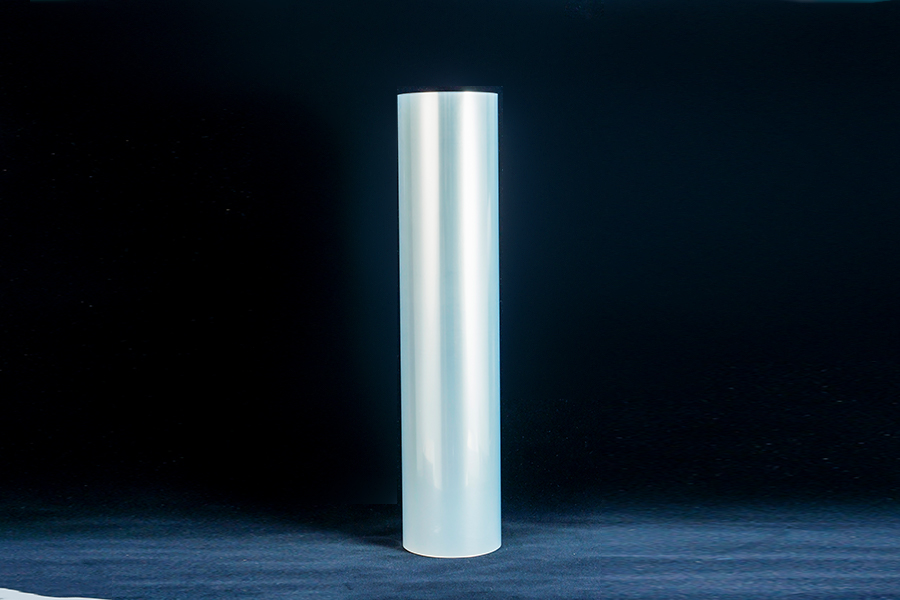
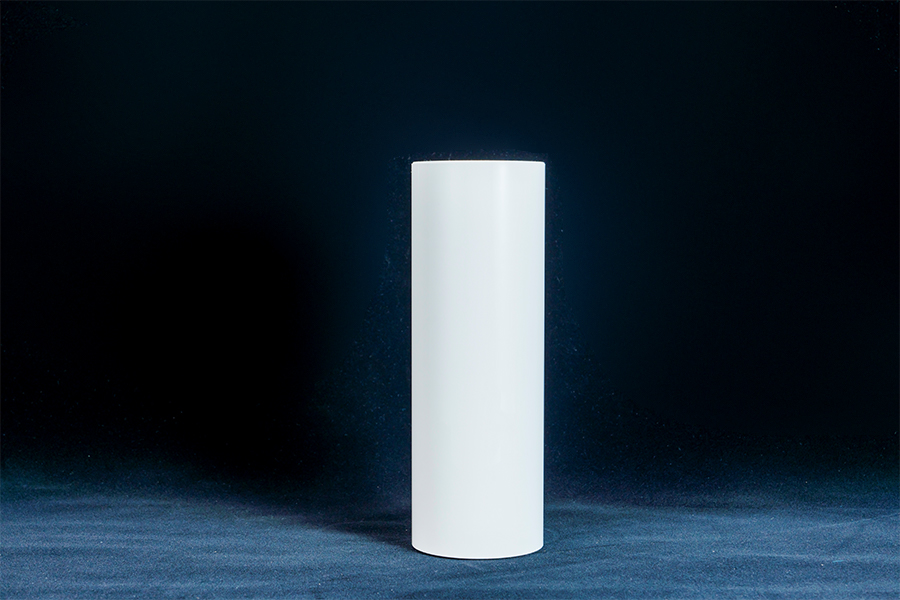
 Glossy PET/EVA Laminating Film for In-House SheetingTransparent glossy PET/EVA film supplied as pre-cut pouches or rolls, with standard 50–175 micron thickness and custom widths for sheet-format planning.View Product →
Gloss is measured by reflection, but buyers experience it as contrast and scratch visibility. A high-gloss surface makes photos and dark inks stand out; it also shows fingerprints and scuffs sooner than a matte surface. Thickness is usually quoted in microns and affects stiffness, curl, and edge feel, not the gloss level itself. Trade catalogs commonly list 80, 100, 125, 150, 175, and 250 micron nominal gauges, but "nominal" is not a tolerance. Ask for a gauge band, then run the sheet through the actual laminator.
Thickness also changes heat transfer. A thicker sandwich may need more dwell time or a lower line speed, which is why the same setting can produce a clear sheet on one stock and a hazy sheet on another. A 250-micron sheet can feel premium on a book cover and still be wrong for a menu that must lie flat. The chart below maps common gauge bands to typical fit as a starting point, not as a pass-or-fail rule.
Figure 2. Common gauge bands, shown as a practical fit reference rather than measured performance data.
Thermal glossy sheets need controlled heat and pressure. They deliver a tight, glass-like bond and high output, but they are less forgiving on heat-sensitive inks, toner, and thin papers. Cold glossy sheets use pressure only. They suit heat-sensitive substrates, short runs, and on-site work, but the adhesive system and liner release matter more. A cold sheet that is too tacky can trap air; one that is too dry can lift at the trim.
| Decision | Thermal glossy sheets | Cold glossy sheets |
|---|---|---|
| Energy input | Heat and pressure; dwell time matters | Pressure only; no heat-set curl |
| Adhesive system | EVA or similar hot-melt | Pressure-sensitive acrylic plus liner |
| Best fit | Menus, covers, cards, high-volume print finishing | Heat-sensitive prints, short runs, site work |
| Main risk | Haze, curl, or blistering from wrong heat profile | Air entrapment, liner release, edge lift |
| Trial check | Peel, haze, and curl after 24 hours | Tack, bubble level, and trim quality |
Order by construction, not by the word "glossy." A useful specification separates the visual requirement from the machine and durability requirements.
Thickness is not just a number: it changes heat transfer, curl, and feel, as this note on laminating film thickness explains. A sample that passes at 100 microns may need a different heat setting at 150 microns, even when both sheets come from the same film family.
Gloss is a functional choice when the printed surface needs contrast, wipe-clean handling, or a protective layer that still shows fine detail. It is less suitable when fingerprints, glare, or heavy scuffing are the dominant concern.
A 125-150 micron thermal sheet gives body and a wipeable surface. Test fold lines and edges, because glossy film can crack if the paper stock is too stiff.
Higher gloss improves dark-ink contrast. Use a gauge that matches the card stiffness, and check trim quality after cutting.
Gloss protects printed covers and makes color images look deeper. Thin covers may curl, so condition samples before approval.
Cold glossy sheets suit heat-sensitive prints. Confirm adhesive tack on the actual substrate, especially coated or recycled stocks.
A glossy sheet can pass a visual check and still fail after 24 hours. Run four checks before releasing a lot:
Keep the trial conditions with the sample. If a later lot behaves differently, the heat setting, roller pressure, paper batch, and sheet gauge are the first variables to compare.
At scale, gloss consistency depends on extrusion control, adhesive coat weight, and slitting. According to WONLAMI's published company profile, the company operates 10 extrusion coating lines and reports annual capacity above 30,000 tonnes across manufacturing sites in China and Thailand. Those figures are useful for capacity screening, not a substitute for a line trial.
Ask for a gauge map across the web, a certificate of analysis per lot, a retained sample, and a slit-edge photo. For converters who need thermal roll stock rather than finished sheets, the product card below points to the glossy thermal laminating roll film route.
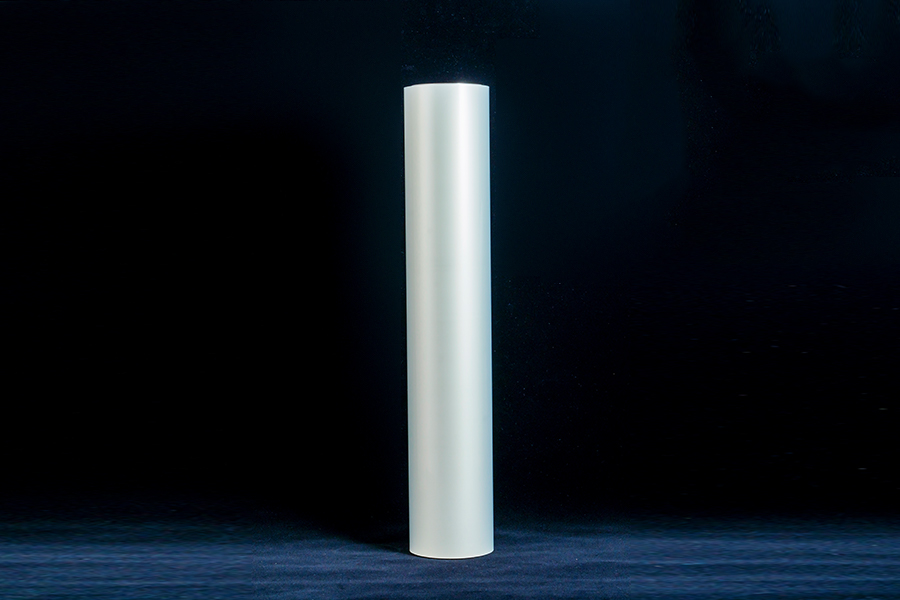 Glossy Thermal Laminating Roll Film for Commercial PrintersHigh-gloss PET/EVA thermal roll film for commercial laminators, available in 18–350 micron gauges and widths up to 1800 mm for trial runs.View Product →
Then request a trial roll or cut sheet at the target gauge, run it on the actual laminator, and approve against a written sample. That sequence is slower than a price-only comparison, but it catches the costly failures before a full order is committed.
Use 80-100 microns for light documents, 125-150 microns for general office and menu work, and 175-250 microns for heavy covers. Confirm the gauge band with your laminator supplier.
Only after the ink is fully dry and tested. Thermal heat can smear some inkjet inks; a cold glossy sheet may be safer for heat-sensitive prints.
Hot lamination uses heat and pressure for a tight bond and high output. Cold lamination uses pressure-sensitive adhesive for heat-sensitive work and short runs.
Common causes are moisture in the paper, uneven roller pressure, low temperature, or trapped air. Preheat the stock, clean the rollers, and run a trial before adjusting speed.
The film surface resists water, but cut edges can wick moisture. For full protection, specify an encapsulated or sealed-edge format rather than a simple sheet.
They use similar film constructions, but pouches are folded and sealed on one edge. Sheets are cut flat. The right format depends on the laminator and the finished piece.
Wholesale Laminating Film Roll Manufacturers





 English
 русский
 Español
 Português