2026-11-18
A converter in a dry, air-conditioned plant pulls a fresh roll of laminating film, peels back the liner, and the sheet jumps to the guide rail before the operator can line it up. By the afternoon the printed sheets are carrying dust that came from nowhere, and double feeds are showing up every few hundred pieces. The film is labelled anti-static. It clearly is not.
Anti-static laminating film is a specification, not a tagline. Two numbers decide whether it deserves the name: surface resistivity, which stops charge from building up in the first place, and static decay time, which says how quickly whatever is left drains away. If a supplier cannot put both on paper, with a test method and a humidity figure next to them, the film is standard BOPET with a helpful sticker on the carton.
Static behaviour is read in ohms per square (Ω/sq). Materials fall into three rough bands: conductive below about 104, static-dissipative between 106 and 1011, and insulating above 1012. Plain BOPET base film sits far inside the insulating band, which is exactly why it holds charge, pulls dust out of the air, and refuses to lie flat on a feed table.
An anti-static laminating film does its work by dragging that surface figure down into the dissipative band, where charge can leak away in a controlled way instead of snapping or piling up. Ask for the test humidity alongside the value. A coating that reads 108 Ω/sq at 50% relative humidity can climb two orders of magnitude when the same room drops to 20% — and a dry winter plant is precisely where static complaints begin.
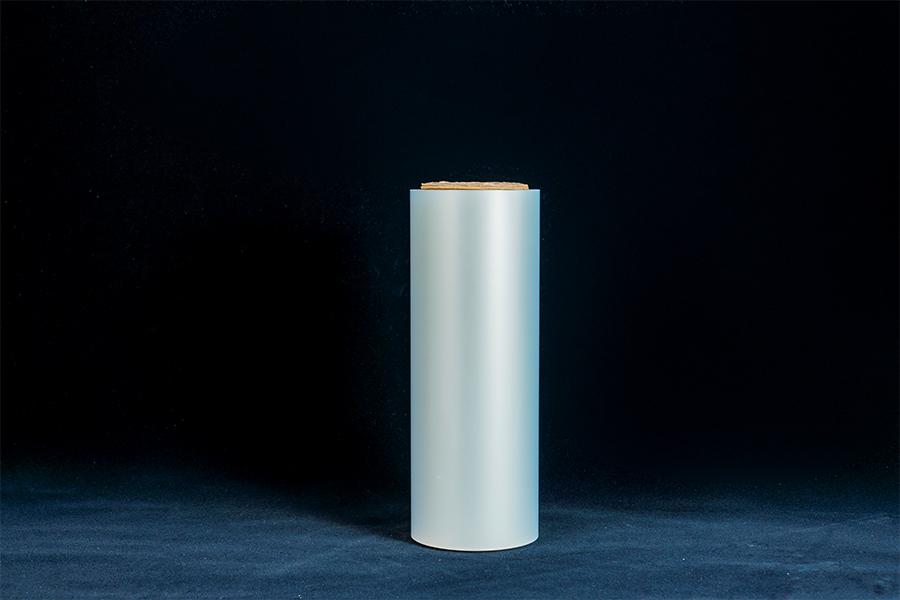
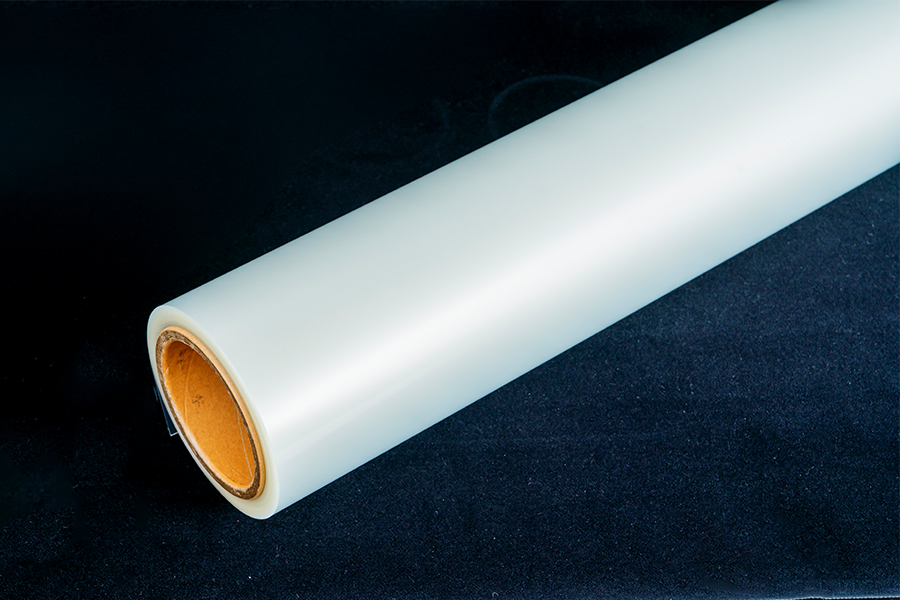
 Anti-Static Laminating Film with Permanent Dissipative PerformanceCo-extruded anti-static film supports clean sheet separation and automated feeding, with resistivity and decay data suited to ESD-controlled laminating programmes.View Product →
Decay time is the second half of the story. Where a customer's ESD programme requires it, the figure is quoted as the time taken to fall from 1000 V to 100 V. It is a more honest indicator than the word "anti-static" on a datasheet, because it shows how the film behaves under a real charge rather than at rest.
Static is rarely a headline problem. It shows up as scrap, rework and slow lines, which is why it gets tolerated for so long. The usual trouble spots:
There are three routes to the same label, and they behave very differently after six months on a shelf.
A thin conductive or nanoparticle-bearing coating is applied over the base film. Performance is consistent batch to batch, and the coating can be combined with a hard coat, a matte finish or a writable top layer. The trade-off is durability: abrasion, solvent cleaning and some adhesive residues can wear the layer back, and when it goes, the static protection goes with it.
The anti-static agent is compounded into the extruded layer, so it is part of the film rather than something sitting on top of it. It does not rub off, but dispersion quality matters, and thinner gauges carry less additive than heavy ones. Consistency between production runs is what separates a reliable supply from a lucky first sample.
The additive migrates to the surface and works by picking up trace moisture from the air. It is inexpensive and effective in a normal office, yet it fades in a dehumidified plant or a cold dry winter. It can also bloom onto inks and adhesives, which is a well-known cause of lamination bonding failures.
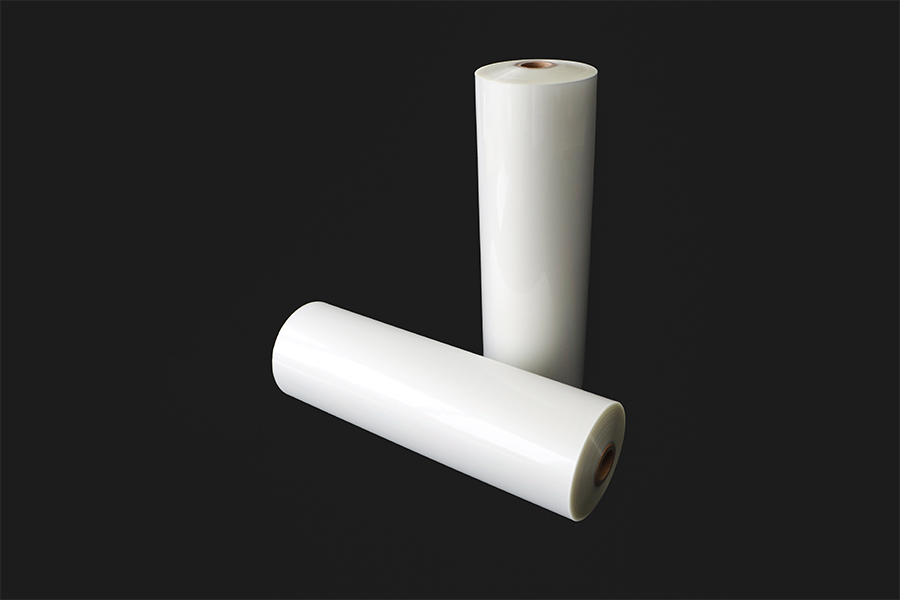 BOPET+EVA Thermal Laminating Roll FilmCo-extruded BOPET and EVA roll film offers stiffness, clarity and water resistance for printed menus, posters, book covers and document encapsulation.View Product →
For most production lines the practical answer is a coated or in-resin dissipative layer on BOPET, selected around the surface you actually need — gloss, matte, writable or scratch-resistant. A correctly specified base film with a stable coating outperforms a heavier film whose coating wears off in the first week.
You do not need a laboratory to separate a real anti-static film from a hopeful one. A resistance meter with a concentric ring probe, a humidity reading and half a day on the line will tell you most of what matters.
A purchase order is only as good as the parameters written into it. These are the lines worth insisting on before a trial order becomes a repeat order.
| Parameter | What to request | Why it matters |
|---|---|---|
| Surface resistivity | Value inside the dissipative band, with test humidity stated | Confirms the film is genuinely anti-static rather than plain BOPET |
| Decay time | 1000 V to 100 V result, with the standard referenced | Predicts how the film behaves under real charge, not at rest |
| Base structure | BOPET, BOPP or three-layer construction | Drives heat resistance, stiffness and optical performance |
| Thickness and tolerance | Nominal micron or grammage with a stated tolerance | Affects press settings, yield per roll and cost per square metre |
| Coating durability | Resistance tested before and after abrasion | Shows whether protection survives handling and cleaning |
| Roll format | Width, core diameter, maximum splice count per roll | Prevents stoppages and waste on high-speed lines |
| Storage and shelf life | Dry, shaded storage with a stated usable period | Protects performance between delivery and use |
Any film can be made well once. The question is whether the tenth container matches the first, and that depends on the extrusion and coating line behind it. WONLAMI has been producing functional extrusion-coated film in Yixing since 1999, and the company background is set out on the company profile page; production currently runs across 10 extrusion coating lines with annual capacity above 30,000 tonnes, split between sites in China and Thailand, which is detailed in the factory overview.
For buyers, that scale translates into two practical things: a coating formulation that can be held stable across repeat runs, and the ability to hold a tolerance on width and thickness once a specification is locked. Ask for the line data, not just the sample data.
Most applications sit between 106 and 1011 Ω/sq, measured at a stated humidity. Values below that band are conductive rather than dissipative.
Standard film is an insulator and holds charge. Anti-static film adds a dissipative coating or additive layer so charge leaks away instead of building up.
Yes, when the film is built for thermal processing. Confirm the base structure and bonding layer with the supplier before running it at production speed.
Coated and in-resin types hold their performance for the film's stated shelf life under dry, shaded storage. Migrating types weaken over time and in low humidity.
Moisture-dependent additives lose effectiveness below roughly 30% relative humidity. A coated or in-resin dissipative layer is far less sensitive to dry conditions.
Yes. Slitting width, core size and roll length are normally specified per order, and splice limits should be agreed at the same time.
Wholesale Laminating Film Roll Manufacturers





 English
 русский
 Español
 Português